
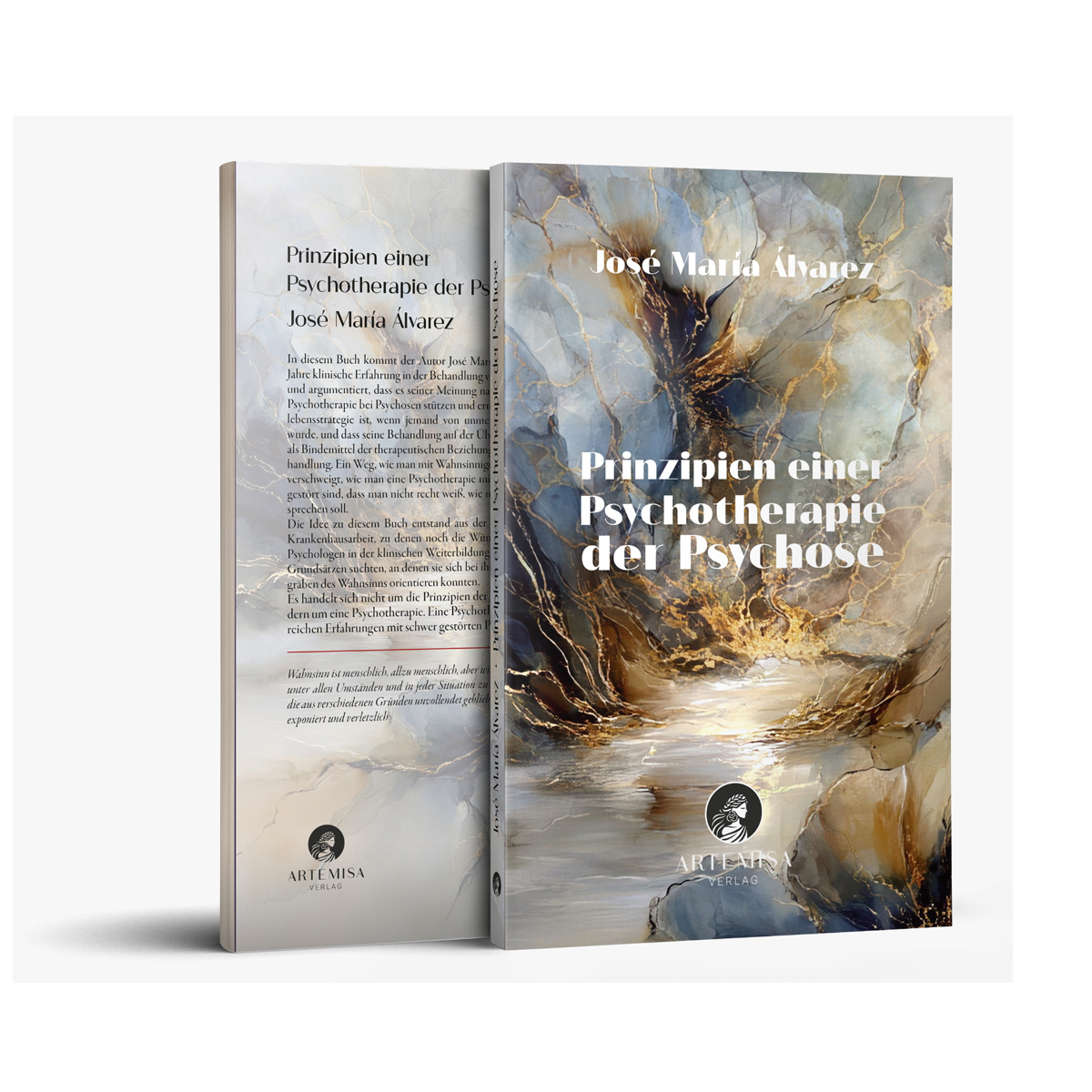
Principles of Psychotherapy of Psychosis
€ 35,00
Madness is human, all too human, but humans are not prepared to survive any circumstance or situation. And even less so those who, for various reasons, were left half-finished and subsist in the open, more exposed and vulnerable. (José María Álvarez)
In the book, the author, José María Álvarez, with more than thirty years of clinical experience in the treatment of psychosis, concludes and argues what he considers to be the two key pillars that support and enable psychotherapy of psychosis: that madness is a defence mechanism for survival when someone is overwhelmed by inhuman experiences, and that its treatment is based on transference, that is, on the speech as the cement of the therapeutic relationship and the basis of any possible treatment. A guide on how to talk to the mad, what to say and what to keep quiet, how to conduct psychotherapy with these patients, who are so disturbed that it is not clear how to approach them and talk to them.
The idea for this book arose from the assumption of new tasks in hospital work, to which were added requests from residents and colleagues eager for some principles to guide them in their daily work in the trenches of madness. This is not about the principles of psychotherapy for psychosis, but about psychotherapy in general. One form of psychotherapy among many, based on extensive experience with severely disturbed patients.
The oeuvre «Principles of Psychotherapy of Psychosis» was first published by the Spanish publishing house Xoroi Edicions (Barcelona).